Fast charging has been a common feature in today's modern smartphones, laptops and even electric vehicles. With the brands promising customers 50% charging in a few minutes, many buyers around the world wonder: Is fast charging dangerous? Does it damage your battery, overheat your phone or reduce its lifespan? This article will break down your misconceptions, explaining to you about the technology and helping you safely fast-charge your device.
Is Fast Charging Dangerous?
Fast charging is usually safe due to the built-in protections in your device, such as thermal sensors and power management systems. The risk usually comes from external factors such as an uncertified charger or overheating, with the impact of which will be a slow battery rather than any direct danger.
How Fast Charging Affects Battery Health
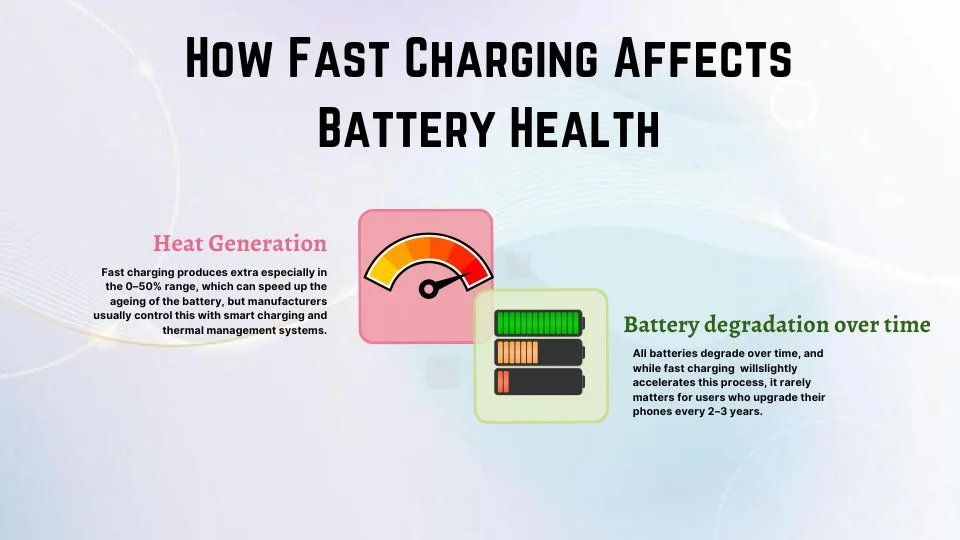
1. Heat Generation
Heat is one of the biggest enemies of lithium-ion batteries. Fast charging produces more heat than standard charging, especially during the first 0 - 50 % phase.
- Excessive heat can accelerate battery ageing.
- Repeated exposure decreases the overall battery capacity over time.
Manufacturers usually counter this with intelligent charging algorithms and thermal management systems.
2. Battery Degradation Over Time
All battery degrades over a period of time regardless of their charging speed. Fast charging speeds up this process slightly, but the difference is usually minimal for average users.
If you are upgrading your phone every 2-3 years, fast charging is not likely to cause any issues.
Built-In Safety Features That Protect Your Phone
Modern smartphones have some built-in advanced protections which make fast charging safe :
- Adaptive charging: Gradually slowing down the charging speed after the battery reaches around 80-90 % to decrease the stress adn extend the battery lifespan.
- Thermal throttling: Cosntanlty monitoring the device temperature and automatically lowering the power output if any overheating is detected.
- Smart power negotiation: Allows real-time communication between the charger and the phone to provide safe and device-specific wattage.
- Automatic cut-off protection: Stops the power flow once the battery is fully charged to prevent overcharging.
- Battery management software: Optimise the charging patterns based on the usage to maintain long-term battery health and the safety of the device.
When Fast Charging Can Become Risky
Fast charging in itself is safe, but some habits can increase its risk :
- Using cheap or counterfeit chargers: Low-quality or fake chargers usually lack proper voltage regulation, surge protection and heat control. This can lead to unstable power delivery, excessive heat buildup, battery degradation and in rare cases can lead to electrical safety issues.
- Charging in hot environments: Fast Charging in direct sunlight, inside parked cars or under pillows and blanket traps up the heat. High temperature places extra stress on lithium-ion batteries and can considerably speed up the long-term wear of the battery.
- Gaming or heavy usage while charging: Running resource-heavy apps, gaming or streaming during the time of fast charging increases the internal heat from both charging and processor load, which worsens thermal stress and increases the battery ageing.
Fast Charging vs Normal Charging: Which Is Better?
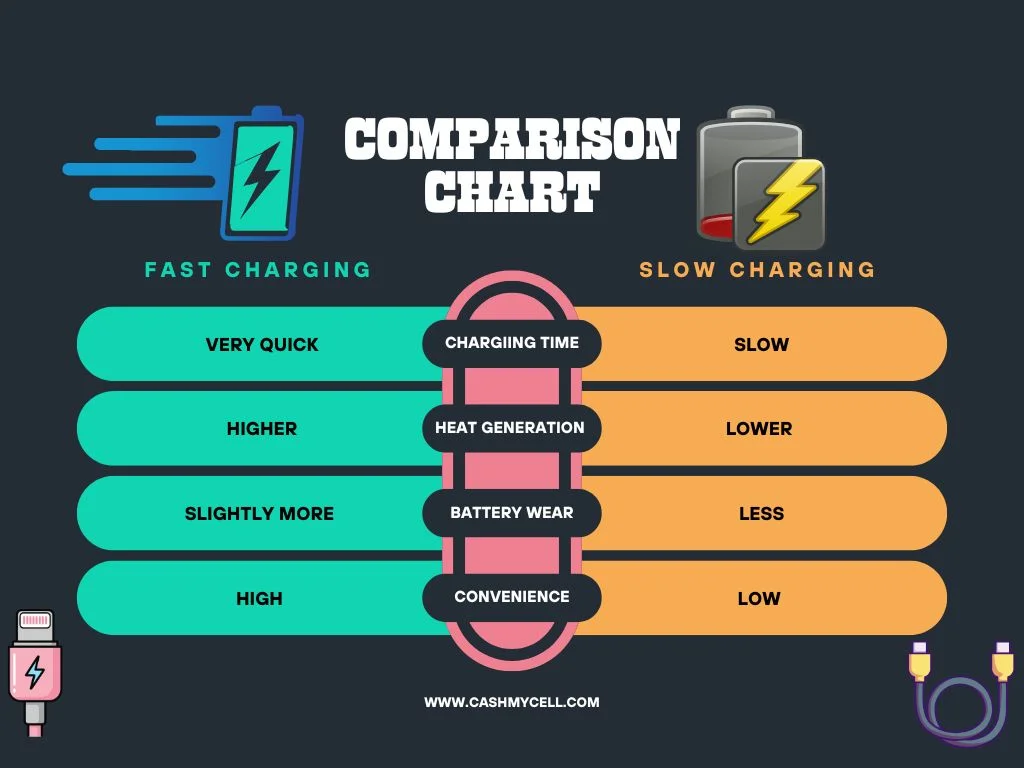
| Aspect | Fast Charging | Normal Charging |
| Charging Time | Very Quick | Slow |
| Heat Generation | Higher | Lower |
| Battery Wear | Slightly More | Slightly Less |
| Convenience | High | Low |
Check this also: Can a Carrier-Locked iPhone Be Unlocked?
Is Fast Charging Safe Overnight?
Fast charging usually slows down automatically after 80-90 %, so doing overnight charging is generally considered safe. However, keeping the phone at 100% for long hours can lead to minor long-term stress.
If your phone supports optimised charging, you can enable it to pause charging at 80% and complete it closer to the wake time. In case your phone’s battery goes, you don’t need to worry. You can come to us at CashMyCell, get the best pricing for your damaged phone, and sell it easily.
FAQs
1. Can I switch between fast and normal charging?
Yes, switching between charging speeds is absolutely fine and can even help in the convenience and longevity of the battery.
2. Is fast charging safe for older phones?
Older phones may not have advanced thermal controls. You can use moderate charging speeds if there is extra heating in the device.
3. Does fast charging affect battery percentage accuracy?
Fast charging doesn't affect the accuracy of the percentage, but rapid voltage changes can sometimes make the battery indicator appear to jump rapidly. The system adjusts automatically during normal use.
4. Is wireless fast charging safer than wired fast charging?
Wireless charging is usually safe, but sometimes produces more heat than wired charging, which can affect the battery health over a period of time.
5. Can fast charging be turned off?
Some smartphones have the feature of disabling fast charging or enabling slow or optimised charging modes through the battery settings.
Conclusion
Fast charging has become a necessary convenience rather than a risky feature. When used responsibly, it fits easily into everyday device usage without causing any significant harm. Making informed choices around accessories, charging environments, and usage habits makes sure of a smoother experience and better long-term reliability, letting users to take advantage of faster power-ups with confidence and peace of mind.