Upgrading your phone usually leaves you with an important decision to make: should you trade in your old device or sell it yourself? Both options have their own advantages, but the right choice depends on your priority.
With the increasing demand for refurbished and pre-owned smartphones, consumers in today's market scenario have more options than ever before. In this guide, we will walk you through the difference between trading in and selling phones, covering how each of the processes works, their advantages and drawbacks and how to choose the best option for your needs.
What Does Trading in a Phone Mean?
Trading in your phone means handing over your old device to a brand, retailer or platform in exchange for the instant credit or discount on a new phone. Most of the smartphone brands and online retailers now provide their customers with structured trade-in programs.
The process is usually quite simple. You can check the condition of the phone online, get an estimated value and use that amount directly towards your next purchase.
Benefits of Trading in a Phone
- Fast and smooth process
- Instant value applicable to the new device purchase
- No need to bargain with the buyers
- Also includes doorstep pickup
- Lower risk of fraud or payment issues
Limitations of Phone Trade-Ins
While trading in phones is trouble-free, it usually gives you a lower value compared to selling your phone separately. The estimated price of the device will drop after the physical inspection, and you are usually confined to buying the device from the same seller only.
What Does Selling a Phone Mean?
Selling a phone generally involves listing your phone on a resale platform or selling it directly to a buyer for cash. This can be done through online marketplaces, local buyers or the website of the phone buyer.
Unlike in the case of trade-ins, selling off a phone gives you direct returns.
Benefits of Selling Your Phone
- Higher resale value in most cases
- Cash payment instead of store credit
- Liberty to choose where and when to upgrade
- Works well for lightly used or premium models
This option is especially useful if you plan to sell a Google Pixel or other high-demand models that retain strong resale value.
Challenges of Selling Phones
Selling takes more of your effort. You may need to create listings, communicate with buyers, arrange shipping, and wait for the payment. There is a higher risk of delays, negotiation burnout, or scams if you are not careful enough. To reduce these challenges, many users prefer using established resale platforms such as CashMyCell, which simplify pricing, pickup, and payment.
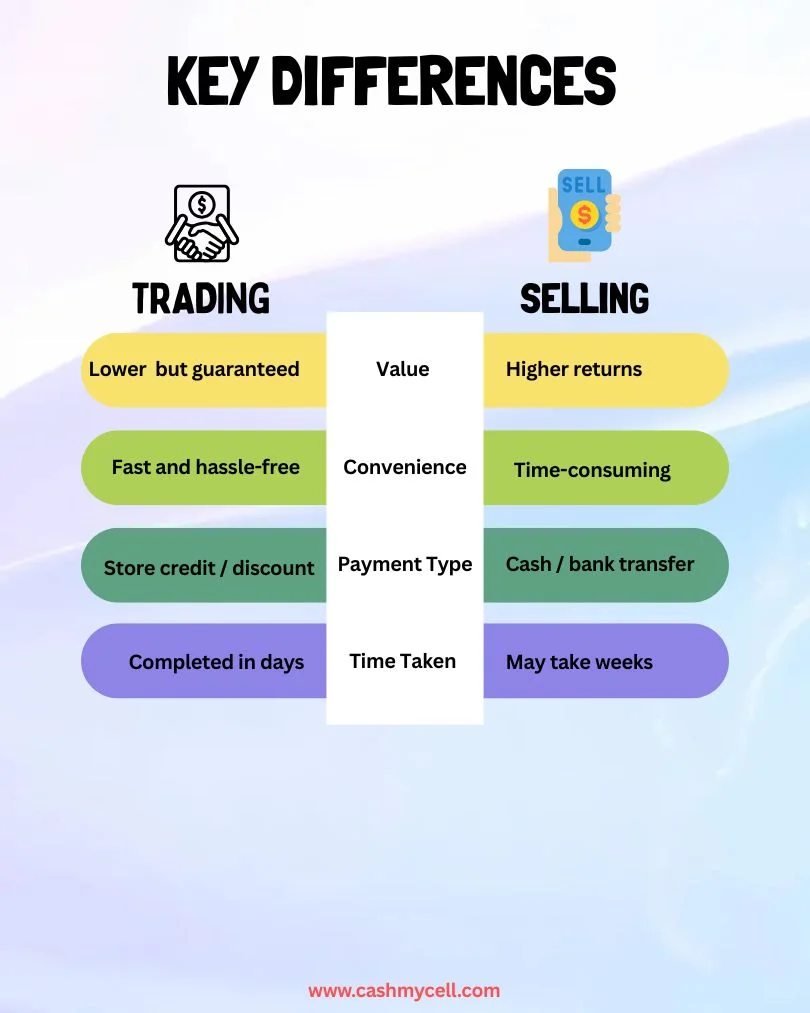
Trading vs Selling Phones: Key Differences
1. Value Received
Selling always gives you better financial returns, especially for the newer or well-maintained phones. Trade-in phones provide you with a lower but guaranteed value.
2. Convenience
Trade-ins win on the ease. Selling requires much more time, coordination and follow-ups, while trade-ins are mostly automated. process. Most trade-in programs handle pickup, inspection and valuation for you, which makes them ideal for customers who are looking for a stress upgrade without managing listings or buyer communication.
3. Payment Type
Trade-in: Store credit or instant discount on a new device
Selling: Direct cash or bank transfer
With trade-ins, the value is locked into a purchase, restricting how it can be used. Selling provides you with liquid cash, which can be used in any way you want to.
4. Time Taken
Trade-ins are usually quick and are completed within days. Where selling can take anywhere from a few days to several weeks, depending on the demand.
When Trading or Selling Makes More Sense
| When Trading In a Phone Makes More Sense | When Selling Your Phone Is the Better Option |
| Your phone is old or heavily used | Your phone is in excellent condition |
| You want a quick upgrade with minimal effort | It is a popular or recent model |
| You don’t want to deal with buyers or listings | You want the highest possible resale price |
| Trade-in bonuses significantly increase value | You don’t mind waiting for the right buyer |
| You prefer predictable, hassle-free outcomes | You want cash instead of store credit |
| Best for convenience-focused users | Ideal for value-focused users |
FAQs
Q1. Does factory resetting my phone affect its value?
Ans. No, in fact, doing a factory reset and removing all personal accounts is necessary and usually needed before trading or selling the phone.
Q2. Are unlocked phones more valuable than carrier-locked ones?
Ans. Yes, unlocked phones usually get you higher offers because they can be used on any network, which increases the demand in resale and secondary markets.
Q3. Is it better to trade in during festive or sale seasons?
Ans. Trade-ins can be more attractive during the sale period as brands usually provide limited-time bonuses or higher exchange values when launching new models.
Q4. Do accessories like chargers and boxes increase resale or trade-in value?
Ans. Original accessories and the box usually improve the resale appeal and can help you in closing the deal much faster, but they rarely increase the trade-in value greatly unless specifically mentioned.
Conclusion
Choosing between trading in and selling phones totally depends on what you value more - convenience or maximum returns. Trade-in provides speed, simplicity and predictable outcomes, which makes it perfect for quick upgrades. Selling, on the other hand, rewards you with patience and effort by giving higher resale value and complete financial flexibility . By evaluating your phone condition, timeline, and upgrade goals, you can easily go for the option which delivers the best for you.