When you trade in your old smartphones, they just don't disappear in the warehouse. Behind every trade-in offer is a carefully planned process which is designed to recover the value, protect the user data and support sustainability goals. From refurbishment and resale to recycling and recovery of the component, companies follow multiple pathways depending on the condition and age of the device.
In this guide, we will explain what companies do with the trade in phones, why the trade in ecosystems and how it benefits both the consumer and the environment.
Initial Inspection and Device Grading
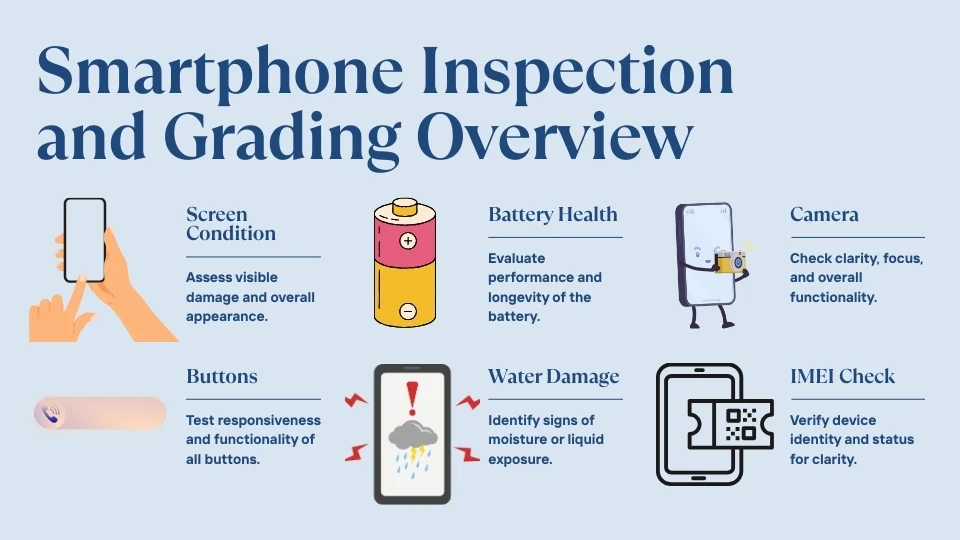
Once the trade-in phone reaches the company or partner facility, the first step is inspection and grading of the phones. This usually determines the future of the phone.
1. Physical and Functional Needs
Technicians examine
- The condition of the screen [ cracks, burn-in, dead pixels]
- Battery Health and Charging Performance
- Buttons, Speakers, microphones and Cameras
- Water or Internal damage indicators
2. Software Verification
The phone is powered on to confirm:
- It's boots correctly
- There are no activation locks
- The IMEI number is valid and is not blacklisted
Based on these checks, the device is graded (like A, B, C, or D), which decides whether it will be resold, repaired, or recycled.
Secure Data Wiping and Privacy Protection
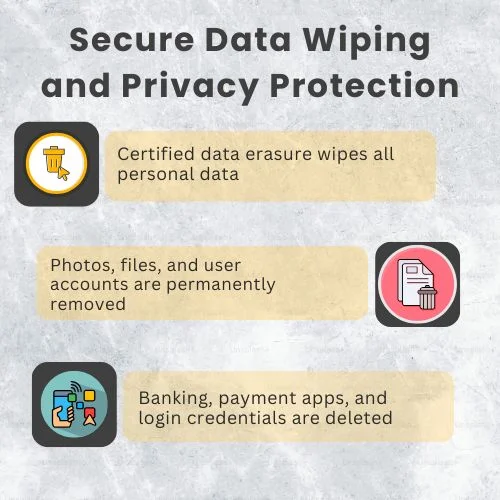
Before any phone is reused or dismantled, companies perform certified data erasure. This process permanently removes any personal information which the phone is holding, such as photos, accounts, and financial data, making certain that user privacy is protected and the device is safe for resale, recycling, or component recovery.
Refurbishment for Resale
A large percentage of the phones are refurbished and resold, giving fully tested and repaired devices a new life while providing customers with a more affordable alternative to buying a new device.
1. Repair and Replacement
A phone having decent condition may receive :
- New batteries
- Replacement screens
- New housings or buttons
Companies only use genuine or certified components to maintain the quality.
2. Quality Testing
After repairs, the device may go through:
- Performance testing
- Battery endurance checks
- Network and sensor calibration
Once all these things are approved, these phones are packaged as refurbished or renewed devices and sold at lower prices through the official channels or partner platforms.
Resale in Secondary and Global Markets
Many of the trade-in phones are resold, usually in the markets where affordability is the priority, which allows consumers to access reliable smartphones at lower prices while extending the overall lifespan of the devices.
1. Domestic Resale
Some of the refurbished phones are sold locally as:
- Certified refurbished models
- Pre-owned devices with a warranty
- Budget alternatives to new phones
2 . International Redistribution
Some of the devices may also be exported to regions where there is are greater demand for the order phone models. This extends the usability life of smartphones and decreases the amount of electronic waste globally.
Component Harvesting and Reuse
Phones which cannot be fully refurbished are not thrown away. When a device is beyond economical repairing, companies carefully dismantle it to recover fully components, making sure that the useful parts can serve a purpose rather than be thrown away. Companies usually extract :
- Cameras
- Displays
- Speakers and vibration motors
- Logic boards (if functional)
These parts are reused for repairs or sold to certified repair networks.
Recycling of Non-Repairable Devices
Phones which are too damaged or outdated usually enter the recycling stream. Recyclers usually extract materials such as gold, silver, and copper from circuit boards and wiring, along with lithium, cobalt, and nickel from batteries. Plastics and glass are also separated from it for the purpose of reuse. Lithium-ion batteries are processed separately to prevent any kind of fire risk and toxic chemical leaks, making sure of safe and environmentally responsible disposal
Environmental and Sustainability Impact
Trade-in programs are a crucial component of corporate sustainability strategies.
Reduced E-Waste. With the help of refurbishing and reusing phones, companies have massively cut down on the number of devices ending up in landfills.
Lower Carbon Footprint
Manufacturing a new phone usually consumes far more energy than refurbishing the existing one. Trade-ins help in reducing :
- Raw material mining
- Energy consumption
- Carbon emissions
This makes trade-ins an eco-friendly alternative to constant upgrades
Business Value for Companies
While sustainability is important, trade in programs also provides you with strong commercial benefits. Companies make use of these programs to improve their profitability, customer loyalty and operational efficiency at the same time.
- Cost Recovery
Trade-in phones also give value after resale. Refurbished devices, harvested components and recovered materials all chip in to additional revenue streams. This allows companies to:
- Offset manufacturing costs
- Reduce the amount of losses from returned or unsold devices
- Monetise phones which would otherwise will be having no resale value
Over time, with time it improves the margins across the device lifecycle.
2. Customer Retention
Trade-in incentives make upgrades more affordable, motivating customers to remain stuck within the brand ecosystem. This strategy helps in :
- Increases repeat purchases
- Reduces customer churn
- Strengthens long-term brand loyalty
When users gain credit from their old phones, they are more likely to go for the same brand again.
3. Inventory Optimisation
Recovered components from the trade in phones help in stabilising the supply chains. Instead of relying totally on the new parts, companies can resume the tested components for the repairs and replacements. This results in:
- Faster device servicing
- Lower repair costs
- Reduced dependence on global component shortages
What Happens to Phones That Have No Value?
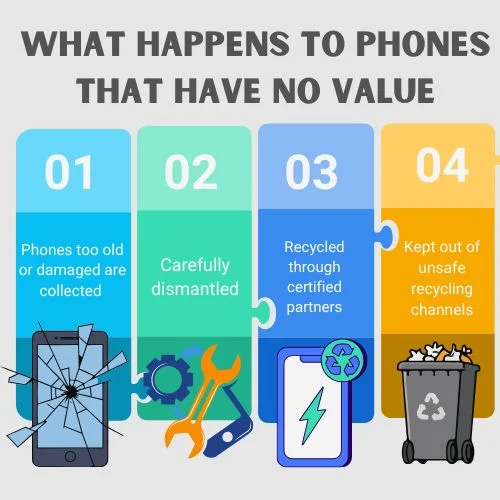
Not all the phones traded are appropriate for resale or refurbishment. Severely damaged phones, devices which are too old or have become technologically obsolete are handled through responsible end-of-life processes.
Responsible Disposal
Even the zero-valued phones are not discarded casually. Companies make sure that these devices are
- Carefully dismantled to separate materials
- Recycled through certified e-waste partners
- Kept out of informal and unsafe recycling channels
This approach makes sure compliance with environmental regulations while preventing any harmful disposal practices which can damage the ecosystems and public health.
FAQs
1. Can my data be recovered after trade-in?
No, Reputable companies make use of certified data-wiping tools which permanently erase all the information.
2. Are refurbished phones reliable?
Yes, they are thoroughly tested, repaired, and usually sold with limited warranties.
3. Why do companies offer high trade-in values sometimes?
Promotional trade offers help companies boost their brand sales, retain customers, and secure usable devices.
Conclusion
Trade-in programs help give old phones a new life through resale, reuse, or responsible recycling. They balance data security, sustainability, and business efficiency while decreasing the electronic waste and consumption of resources. For consumers, trade-in phone lowers the cost of upgrades; for companies, they increase loyalty and recover value. Overall, the trade-in ecosystem fosters a smarter, more circular approach to smartphone ownership and disposal.